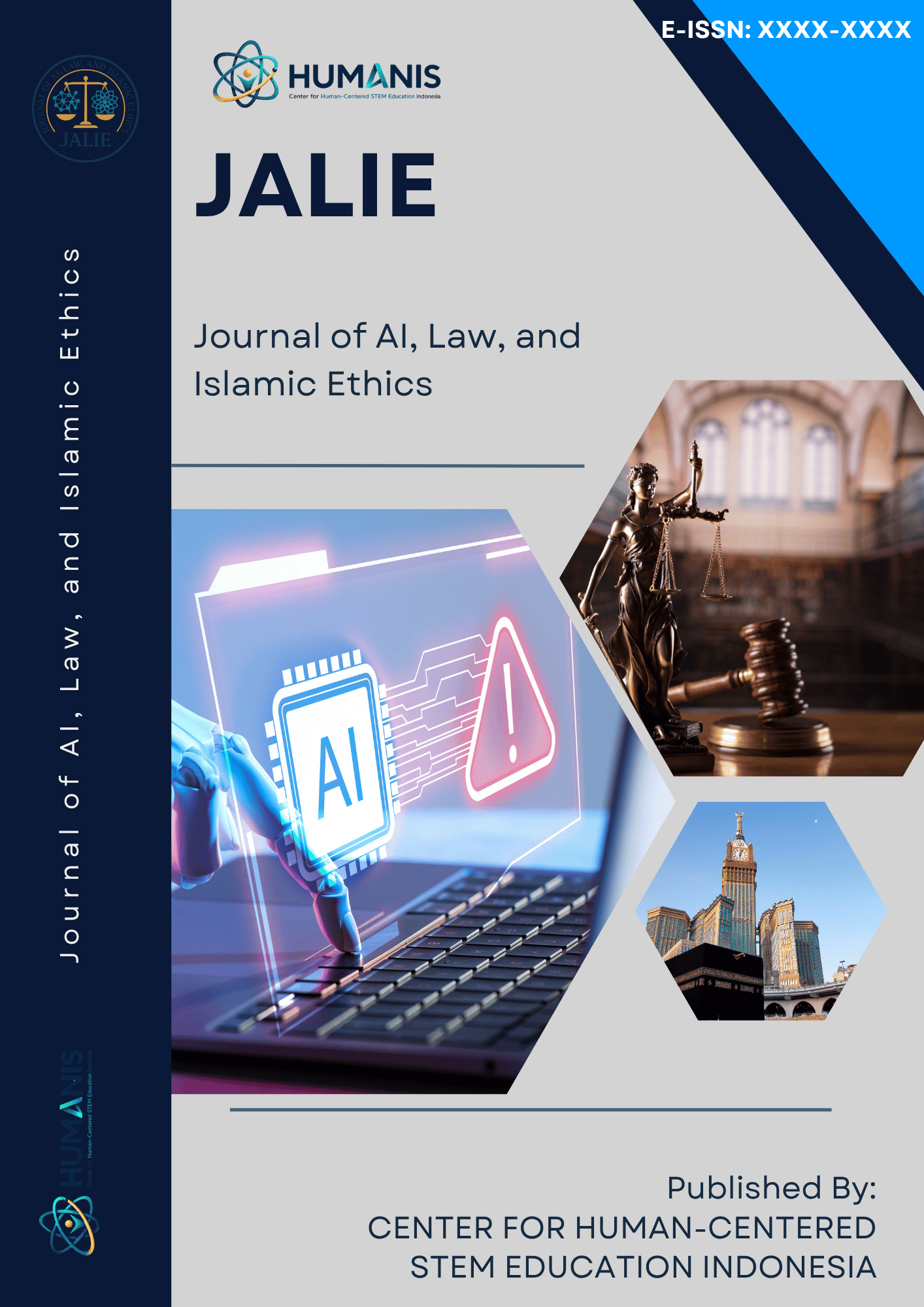
The Journal of AI, Law, and Islamic Ethics (JALIE) is a peer-reviewed academic journal dedicated to exploring the intersection of artificial intelligence, legal studies, and Islamic ethical frameworks. The journal provides a platform for rigorous, interdisciplinary scholarship that addresses the complex legal, ethical, and societal challenges posed by rapidly advancing AI technologies.

JALIE aims to bridge technological innovation, regulatory development, and Islamic moral reasoning. It encourages research that examines how Islamic ethical principles and legal thought can inform AI governance, regulatory policy, and responsible technology deployment. The journal welcomes contributions from scholars, jurists, policymakers, technologists, and interdisciplinary researchers who seek to integrate Islamic ethical perspectives into contemporary discussions on AI.

The journal publishes original research articles, critical analyses, literature reviews, and case studies that explore topics including AI regulation, legal implications of emerging technologies, Islamic ethical theory, AI policy development, and interdisciplinary approaches to technology and society. JALIE emphasizes work that is forward-looking, evidence-based, and capable of informing both academic discourse and practical policy considerations.

JALIE is published three times per year, with issues released in April, August, and December. By providing a dedicated forum for Islamic-informed ethical and legal scholarship on AI, the journal positions itself as a pioneering voice in global interdisciplinary research on technology, law, and religion.

Indexing in